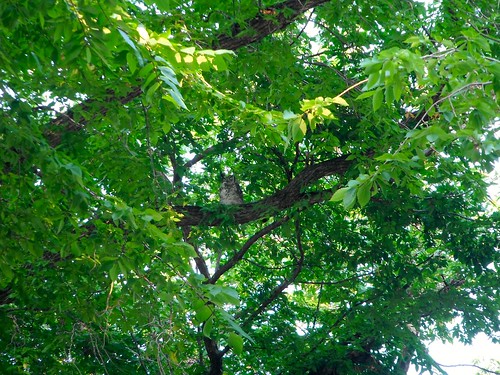
Great Horned Owl sighted Sunday evening within a block of the feathers park!

Great Horned Owl sighted Sunday evening within a block of the feathers park!
Selections for a natural-style flower and herb garden in the northern prairies. Low-maintenance; sunny, dry location; zone 3 hardy; perennial. Whimsical meadow theme; attracts beneficial insects; many are good cut flowers.
Overwintering: water well and mulch generously before first freeze. Pile extra snow on top. Give extra protection on years when cold and winds come before a good layer of protective snow has arrived.
Achillea (Yarrow) A. ptarmica 12-24″ White blossoms; ground cover. “Love Parade” has baby-pink blossoms; grows in clumps. A. millefolium 24″ White, pastel or deep colours. Drought tolerant; deer-proof.
Allium (Onion) Many varieties; many sizes. Vibrant pinks, purples, yellow, white blossoms; perfect globe shaped; late-spring to mid-summer. Water regularly while actively growing. Drought tolerant. Looks best planted in odd-numbered groups, not singly. (cm-may not do well in a crowd)
Delphinium belladonna <5′ Purple/blue blossoms; loose spikes; late spring to midsummer. Some work: 3-4 year lifespan, self-reseed not as spectacular; deadhead & divide regularly for sturdier plants & longer lifespan. Likes rich soil – feed regularly.
Digitalis grandiflora (Foxglove) 24″ Yellow blossoms; tall spikes; early to mid-summer. Deer- and pest-proof. Biennials – may self-reseed, or may need help. (cm*)
Echinacea (Purple coneflower) 36″ Pink or lavender-purple blossoms; summer through fall. E. angustifolia: medicinal. E. purpurea: classic purple. (cm*)
Echinops ritro (Globe thistle) 36″ Blue; large spiny globes; mid- to late summer; cut & dry before fully open. Drought tolerant; pest-proof.
Helianthus occidentals (Sunflower) 48″ Yellow blossom; cone or disk-shaped. Drought tolerant.
Lavendula angustifolia (Lavender) This variety is the one popular for herbal uses. Drought tolerant.
Malva (Mallow) 20″-28″ Pink or white blossoms; pairs nicely with nepeta.
(Variety M. sylvestris has violet blossoms on tall plants, 36″.)
Mentha (Mint) Tea. Cultivars: spearmint, peppermint, and many more. Aggressive spreader – contain in out-of-ground planter or raised bed; or plant in wide open area with no neighbouring gardens where they are welcome to spread.
Mondara citriodora (Lemon bergamot) 30″ Rose-purple short-lived blossoms; summer/fall. Tea.
Nepeta racemosa (Catmint) 6-36″ varieties. Lush, rich lavender-blue blossoms; spikes; long-blooming, throughout summer to early fall. Drought tolerant, deer- and pest-proof. Divide every 3 years. (cm* “lovely”)
Origanum (Oregano)
Papaver (Poppy) Asst varieties 8″, 12″, 36″ Variety of coloured blossoms; early spring.
Salvia (Sage) Purple blossoms; spikes; throughout summer. Grey-green savoury scented foliage. Doesn’t overwinter well. S. nemorosa sap. tesquicola: 24″ Sturdy, brilliant large blossoms. S. officials: <30″ Culinary herb. Deer-proof.
Thymus (Thyme) Lots of hybrids – the fancier, the less hardy. Overwinter in a pot. Thymus x citriodorus: 10″ Lemon thyme. Lavender-pink blossom. T. doerfleri ‘Bressingham‘: 4″ Creeping thyme; hardy. Smells nice when trodden on; set along paths. T. vulgaris: <12″ Culinary herb. Drought tolerant.
Verbena hastata 48″ Dark blue, pink, or white flowers. V. stricta: 24″ Lavender-purple blossoms. Native to prairies; drought-tolerant. Pretty little “confetti cut-out” shaped flowers.
Veronia (Ironweed) 6′ Purple-viotet blossoms; late summer. Does well in heavy soils, even clay; also tolerates drier areas.
Sources:
The Northern Gardener: Perennials That Survive and Thrive, by Barbara Rayment (Harbour Publishing)
Lois Hole’s Perennial Favourites, by Lois Hole and Jill Fallis (Lone Pine)
Absent since spring migration sightings, a few robins have reappeared in the neighbourhood briefly.
Two juvenile robins… or possibly another type of smaller-sized, adult thrush… hopped and hunted their way through the yard – subtly rust-coloured, mottled breasts.
A single adult robin seen nearby another day. Most recently, an adult robin lying dead in the alley with a throat wound… the same bird?
Other places are alive with birdsong in the summer, while this area seems quiet by comparison.
I bear witness to the truth of this recent local newspaper article – in this neighbourhood owned by magpies and squirrels, “few town-nesting American robins ever succeed in raising a clutch of eggs to hatching.”
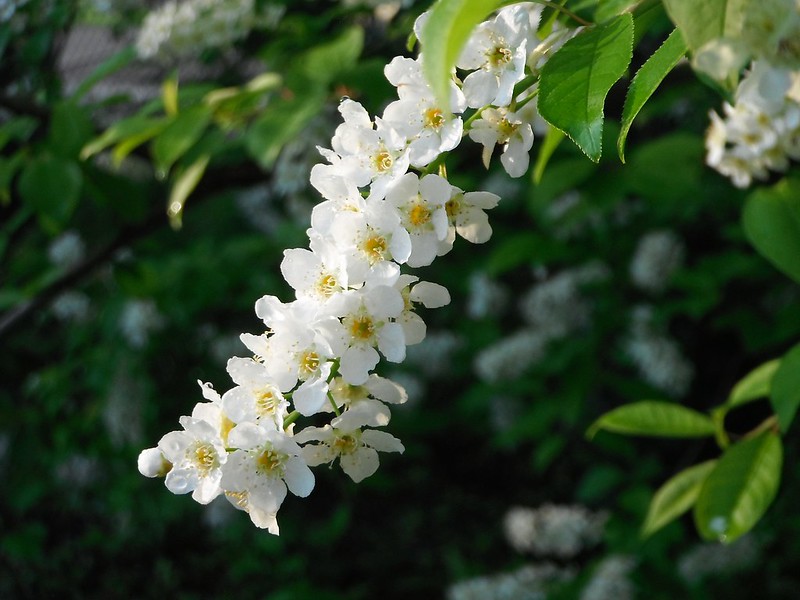
Chokecherry
One of my very favourite prairie fruit is chokecherries! I have distinct memories from childhood of eating them straight from the tree, camping at the lake one summer. Drenched in chokecherry syrup is really the only way I get excited about pancakes. So this summer I made a point of learning to identify this ubiquitous prairie plant – and learn syrup making… mmmmmm
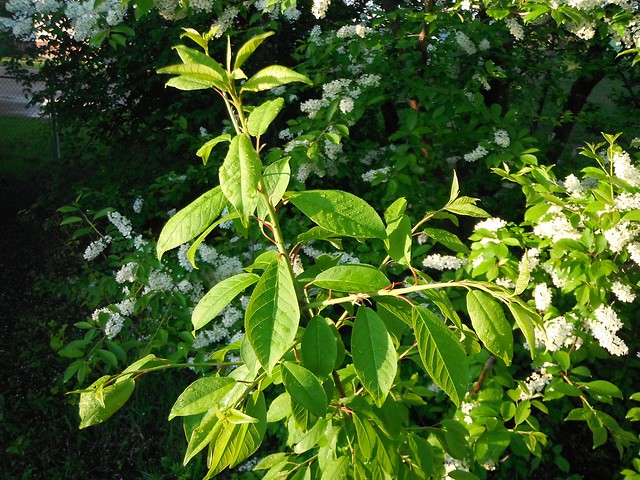
Leaves for IDing…
The harvest is in, and syrup made, thanks to the help of my visiting mom and sister (and another friendly neighbourhood blogger). 😀
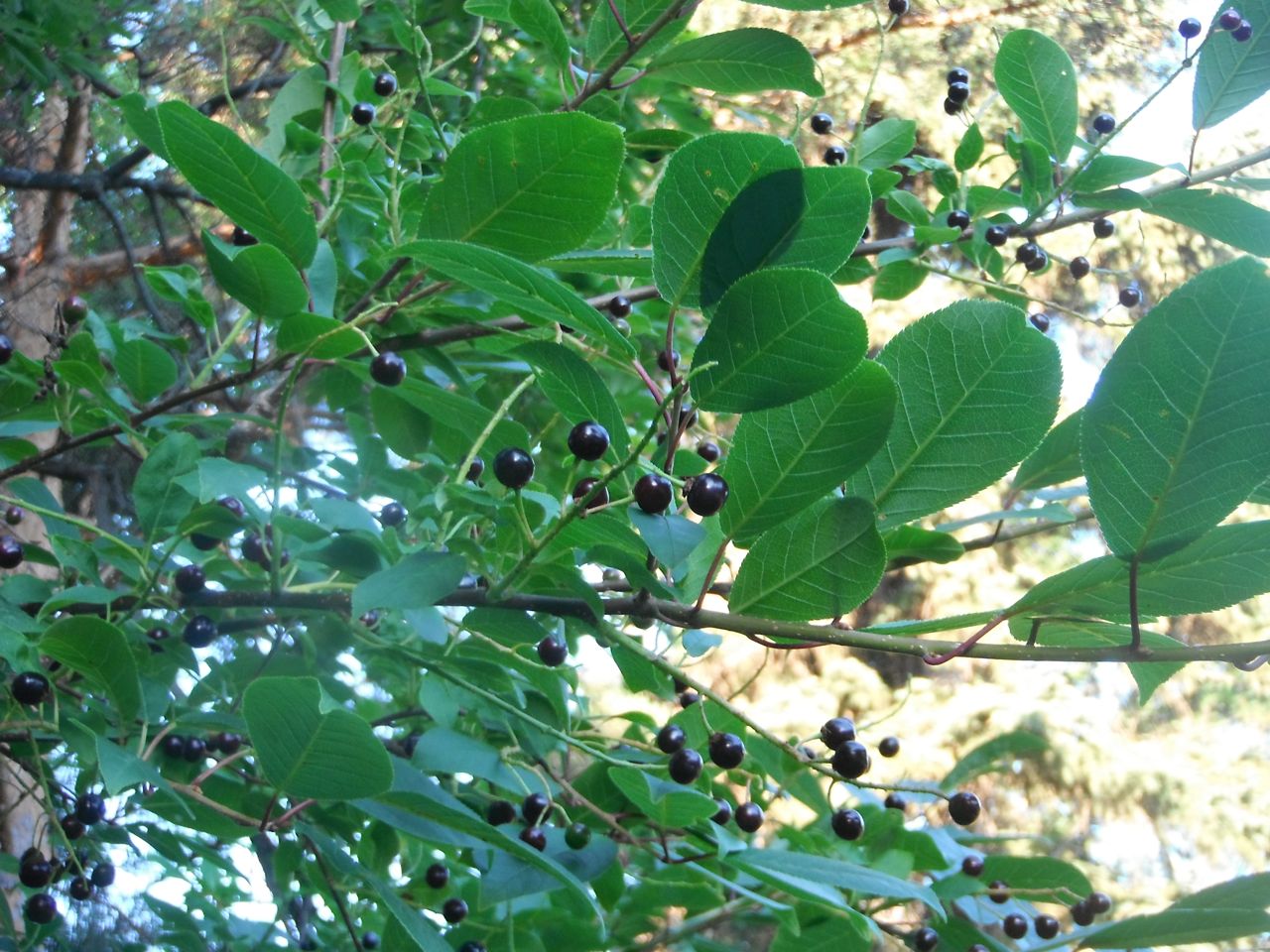
Chokecherries on the branch
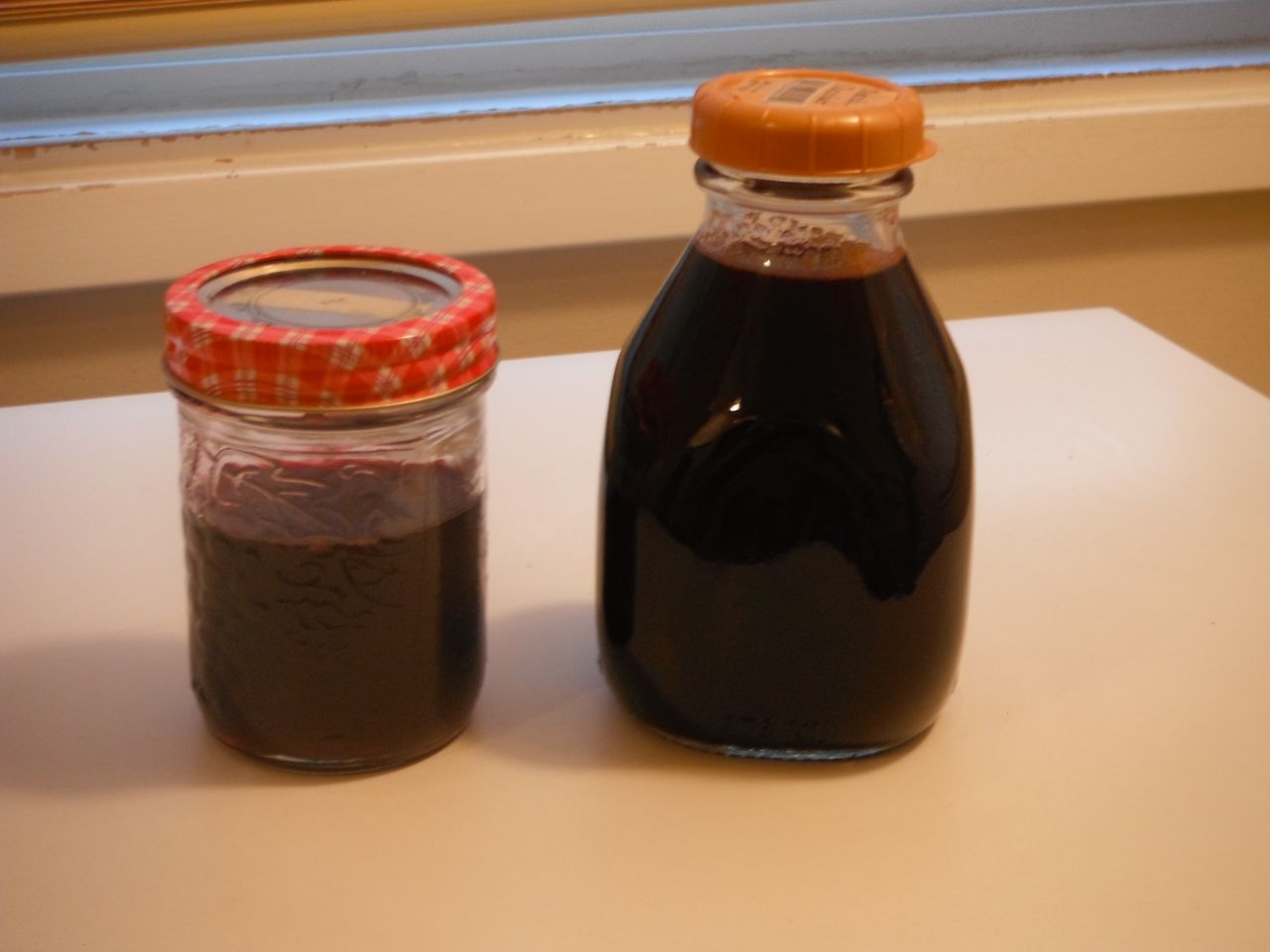
Chokecherries in the jar!
Now off to make buttermilk pancakes! (Oh, the power of suggestion)
A week ago in the park, unusual feathers covered the ground. They were fluffy, with blunt tips. Yellowish fuzzy tendrils so fine that they clung to everything the feathers touched. Brown and white, barred with darker brown. It was hard to find any good ones to bring home because they appeared to have been through a lawn mower.
I assumed from all the feathers that a bird had met its fate there – perhaps a passing coyote?
I’m not familiar with identifying birds by their feathers (except for the brilliant yet ubiquitous Magpie) but my guess was an owl, based on my amateur intuitive reasoning that if the shape of the parts resembled at all the shape of the whole – that squarish, blunt shape & bars just seems owlish!
Today passing through the park again, I was surprised to see fresh feathers, these ones unmown and in great shape. This batch was less fluffy than last week’s, and didn’t have such square tips. Perhaps the bird is alive and well, after all!
It dawned on me that there may be a juvenile owl just getting her first adult suit – from the fresh supply and the reduced baby-fuzziness. Peering into the treetops in the bright sunshine I couldn’t see any sign of the little(?) one, though. If it is an owl, it’s come to the right place – plenty of young jackrabbits to meet any carnivorous appetite in these parts!
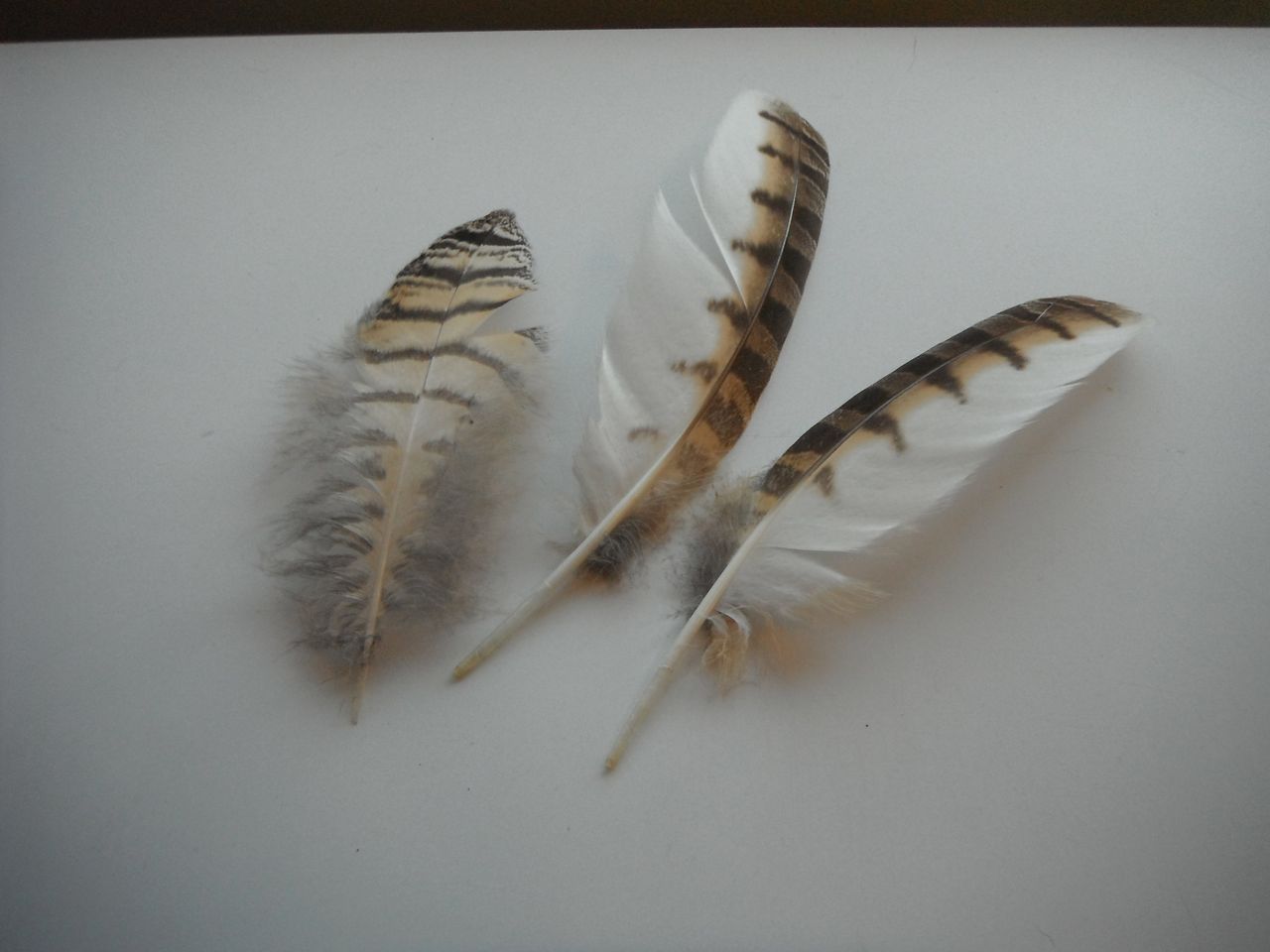
Looking again at the colouring, I remember the last mystery bird in the neighbourhood – the Ring-necked Pheasant… Maybe I’ll have to do some research on this one!
In honour of the newly blossomed roses & peonies, the bees humming away in the blooms, and the season of waking to morning coffee on the patio nearby…
The Feast
The laden arms of the oak, the elm,
and the agitated hunger of the small jays,
the fat globes of white sugarmum
where bees suck love,
and you, in the morning shade,
sipping hot coffee,
the taste of the new day sharp
and alive on your tongue,
are a chorus that says,
Indulge: the world is abundant —
this loving, dying world
to which we are given,
out of which we have come —
O body of the world,
eat with joy
the body of the world.
~The Book of Blessings: New Jewish Prayers for Daily Life, the Sabbath, and the New Moon Festival,
By Marcia Falk

This week baby magpies left the nest in the neighbourhood. So cute with their little tails, concentrating hard on short, inexperienced flights.
This morning I saw something I’ve never seen before – young magpies with light grey markings* where normally they are blue-black. They look so different I wouldn’t have thought they were the same kind of bird, but they were behaving like other young magpies, making the same calls with other magpies, and seemed to be part of a family of normally marked magpies. Possible!?
(*Not pictured here – didn’t have my camera with me!)
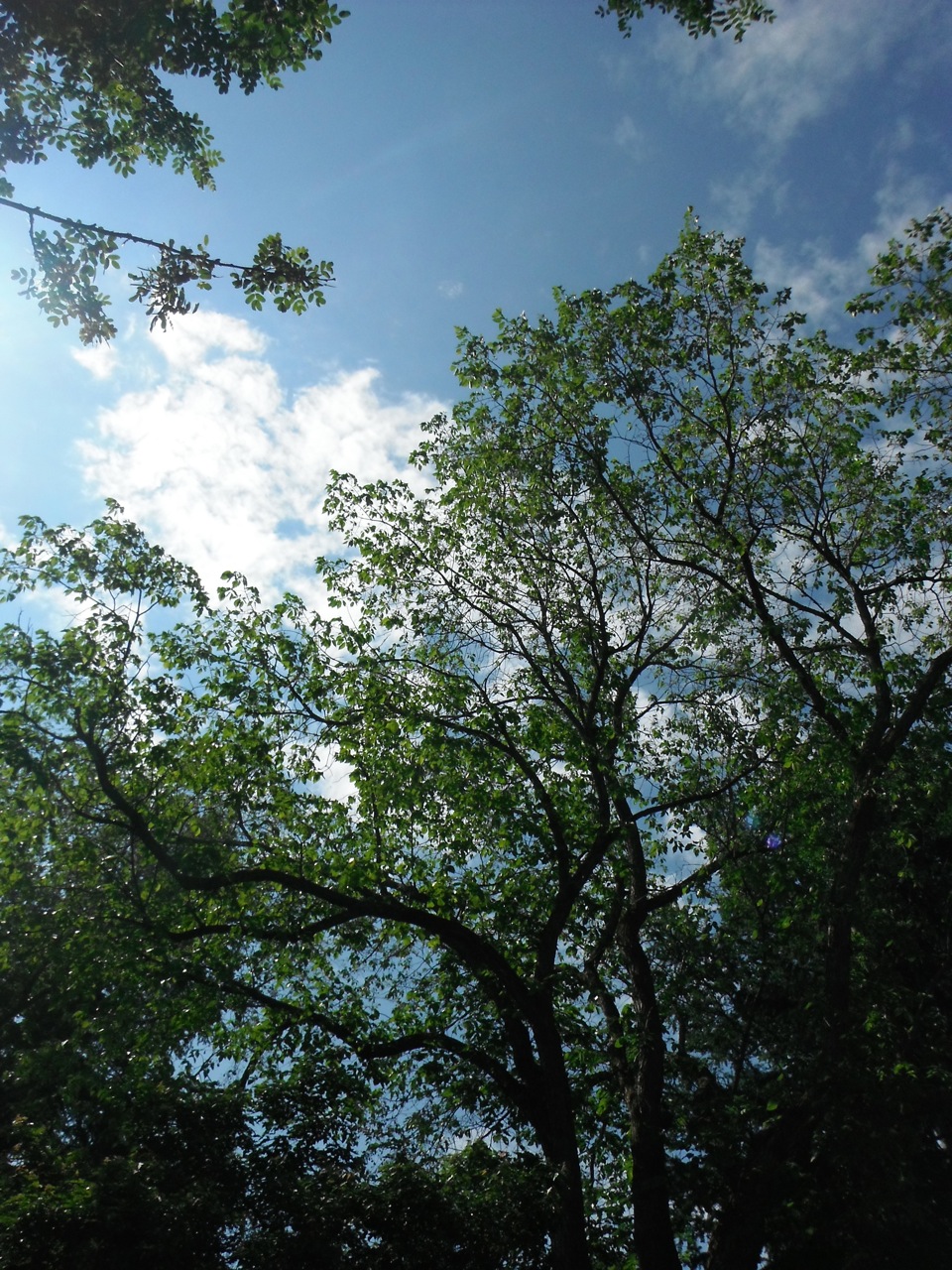
Some years the fruit trees bloom, and 2 days later the wind blows all the petals into confetti on the street, ending the harvest then and there. This year we’ve had the blooms from early-ish May stretching right into June, surviving the May rainfall, which was gentle and windless for the most part.

blossoms in the rain – organic gems


7 days of rain in a row. Not a constant downpour, but 7 days with rain in them is still noteworthy here. Love it! Those cool, fluffy gray days! Light sprinkles and straight-down showers with no wind – a rare occasion for umbrellas!
It rained and it rained and it rained. Piglet told himself that never in all his life, and he was goodness knows how old — three, was it, or four? — never had he seen so much rain. Days and days and days.
“If only,” he thought, as he looked out of the window,” I had been in Pooh’s house, or Christopher Robin’s house, or Rabbit’s house when it began to rain, then I should have had Company all this time, instead of being here alone, with nothing to do except wonder when it will stop.” And he imagined himself with Pooh, saying, “Did you ever see such rain, Pooh?” and Pooh saying, “Isn’t it awful, piglet?” and Piglet saying, “I wonder how it is over Christopher Robin’s way” and Pooh saying, “I should think poor old Rabbit is about flooded out by this time.” It would have been jolly to talk like this…
…
It was on this morning that Owl came flying over the water to say “How do you do,” to his friend Christopher Robin.
“I say, Owl,” said Christopher Robin, “isn’t this fun? I’m on an island!”
“The atmospheric conditions have been very unfavourable lately,” said Owl.
“The what?”
“It has been raining,” explained Owl.
“Yes,” said Christopher Robin. “It has.”
“The flood-level has reached unprecedented height.”
“The who?”
There’s a lot of water about,” explained Owl.
“Yes,” said Christopher Robin, “there is.”
“However, the prospects are rapidly becoming more favourable. At any moment — ”
“Have you seen Pooh?”
~Chapter IX In Which Piglet Is Entirely Surrounded By Water
Winnie the Pooh, by A.A. Milne
 Field to Forest